Latest
Newest FirstPressure Washer Troubleshooting — Symptom Guides
The hub for a gas pressure washer that's acting up. Surging, stalling, weak pressure, leaks, or soap that won't draw — find your symptom and work it cheapest fix first. Most problems trace back to one part.
Pressure Washer Unloader Valve — The Part Behind Most Symptoms
Surging, stalling, and weak pressure keep tracing back to one small part on the pump head. We explain what the unloader valve does and how to test it before you ever buy a pump — then the symptom guides fall into place.
Pressure Washer Surging at Idle — Causes and Fixes
Revs up and down or pulses when you release the trigger. That hunting is a bypass problem, not a broken pump. We diagnose the six causes cheapest-first, from trapped air through the unloader valve.
Pressure Washer Stalls When You Release the Trigger
Runs fine spraying, then dies the instant you let off. The pump isn't entering bypass and the pressure spike stalls the engine. Six causes, cheapest-first, from the throttle setting to the unloader.
Pressure Washer Surging and Pulsating While Spraying
Pressure throbs high and low with the trigger held down. Usually the pump isn't getting a full charge of water — we work the supply, nozzle, and check valves before the unloader gets the blame.
Pressure Washer Won't Draw Soap — Causes and Fixes
Sprays water fine but no detergent. The one symptom that lives downstream at the injector, not the pump. We start with the nozzle and pressure setting, then work through clogs and worn parts.
Pressure Washer Leaking Water From the Bottom
Water pooling underneath is usually a loose fitting, the thermal release valve, or a cheap worn seal — not a dead pump. We diagnose it by where the water comes from, cheapest fix first.
Pressure Washer Won't Start After Sitting
Ran fine when you stored it, then dead after a season in the shed. It's almost always stale fuel and a gummed carburetor — not a dead engine. We diagnose it fuel-first, cheapest fix first.
Leaf Blower Hard to Start When Hot? Vapor Lock Causes and Fixes
Fires up cold, runs fine, then won't restart once it's hot — until it cools and starts like nothing happened. That's vapor lock: fuel boiling in the carburetor. We give the hot-start procedure that works right now, then the six heat-related causes and how to stop it — from a blocked fuel-cap vent to a coil that fails at temperature.
Leaf Blower Bogs Down at Full Throttle — Causes and Fixes
It starts, it idles, then dies the second you open the throttle. That pattern is almost never the carburetor first — it's an air, fuel, or exhaust restriction. We diagnose the six causes cheapest-first (air filter, stale fuel, fuel filter, spark arrestor, carb, high-speed mixture), with a symptom-to-cause table and the parts that fix most bog-downs.
Can You Use a Leaf Blower for Snow? What Actually Works
Yes — but only for the right snow. A leaf blower clears a light, dry, powdery dusting faster than a shovel and leaves pavement bare, and fails completely on wet, deep, or packed snow. We cover exactly where that line falls, the snow types it handles, the specs that matter in the cold, and the technique that makes it work.
Best Leaf Blower for Snow Removal — The Ones People Actually Use
The leaf blowers people actually reach for on a snowy morning, chosen for airflow that survives the cold rather than spec-sheet hype. We cover the CFM and MPH that move snow, gas vs. battery in freezing temps, and credible picks from EGO, Milwaukee, and gas backpacks over the no-name spam the roundups recycle.
ECHO PB-2620 vs STIHL BG 86 C-E — The Gas Handheld Showdown
The two best gas handheld blowers we've reviewed, separated by a tenth of a point. We compare them spec-by-spec — the ECHO's class-leading 456 CFM, 15.8 N of force, and 5-year warranty against the STIHL's 190 MPH peak, Easy2Start pull, and lower price — then name the right pick for each buyer, including the CARB rule that decides it outright in California.
2-Cycle vs 4-Cycle Snow Blower — Why 4-Cycle Won
On snow blowers this isn't really a choice — 4-cycle already won. Every two-stage and three-stage machine runs one, and single-stage has largely followed. We cover how each engine cycle works, compare across six dimensions (power and torque, fuel mixing, cold starting, availability, noise, maintenance), and explain the one niche where a 2-cycle single-stage still makes sense.
Leaf Blower Carburetor Adjustment — L, H, and T Screws
Factory carburettors do not drift on their own, so most people reaching for a screwdriver have a filter, fuel, or spark arrestor problem instead. We cover the four checks to do first, what each screw actually controls, the splined and Pac-Man tools different brands need, why limiter caps are a diagnostic signal rather than an obstacle, and the full tuning order — erring rich, because lean is what seizes a two-stroke.
Leaf Blower Pull Cord Stuck — Recoil, or Engine?
A stuck starter cord has two completely separate families of cause, and one five-minute test splits them before you dismantle anything. We cover the diagnostic, the fixes on each side, why a broken recoil spring is the one case to not attempt, and what actually differs between Stihl, Echo, Husqvarna, Ryobi, and Troy-Bilt.
Leaf Blower Won't Idle — Causes and Fixes
Starts fine but quits at idle, or won't hold a steady low speed? On a gas blower it's nearly always a fuel, air, or spark-arrestor restriction — not the idle screw. We diagnose the six common causes cheapest-first, split the two symptom patterns (starts-then-dies vs. idles-rough), and explain why the carburetor and idle adjustment come last, not first.
Milwaukee Gutter Cleaning Kit — Which M18 FUEL Blowers the 49-16-2790 Fits
Milwaukee makes one OEM gutter attachment, the 49-16-2790, and it fits only two blowers — the M18 FUEL Dual Battery (2824) and the Gen 3 M18 FUEL (3017). Gen 1 and Gen 2 are out, including the 2724, which retailer listings rarely flag. We sort the verified fit matrix, review the attachment honestly at 8 ft of single-story reach with its 360° elbow, and cover when a third-party kit wins for two-story.
Leaf Vacuum for Acorns — What Actually Picks Them Up
The handheld leaf vacuum most people picture will jam and crack its impeller on hard acorns. We cover why mulching vacs fail, the collection tools that genuinely pick acorns up — lawn sweepers, shop vacs, and nut gatherers — and the blow-pile-collect workflow that ties them together.
Leaf Blower vs Snow Blower — Which One Actually Clears Snow?
They both clear the driveway, but they move snow in completely different ways — and that one difference decides which to grab. We cover how airflow beats an auger and where the auger wins, where each tool actually belongs (decks, steps, and light powder vs. wet, deep, packed snow), a side-by-side comparison, and the technique that makes a leaf blower work on snow in the first place.
Leaf Blower Attachments — Nozzles, Gutter Kits, Vacuum Kits & Adapters
Your blower is only half the tool — the right attachment turns it into a gutter cleaner, a yard vacuum, or a precision driveway scrubber, but only if it fits. We break down all five attachment types — flat vs. round nozzles, gutter kits, vacuum and mulch systems, air boosters, and inflator adapters — with the real models behind each, the OEM-vs-universal split that decides fitment, and the honest caveats most listings skip, including the air-booster claims worth ignoring and why you can't convert a standard blower into an inflator.
WORX Gutter Cleaning Kit — Which of the Four Kits Fits Your Blower
WORX sells four overlapping gutter kits, and picking the wrong one is easy — the WG585 won't work with the WA4096, for instance. We sort out which kit fits which blower, review the WA4094 GUTTERPRO as the headline pick, flag the incompatibilities retailer listings gloss over, and cover the single-story reach limit that applies right across the lineup.
DeWalt Gutter Cleaning Kit — Why There's No OEM Option (and What Fits)
DeWalt doesn't make a true OEM gutter kit — the DWOAS7BL is a power-head converter, not a gutter tool. So cleaning gutters with a DeWalt blower means a third-party kit, and which one depends on your exact model. We map the verified CFM across the DCBL720, 722, 724, 772, and 777, explain model-specific vs. universal kits, and cover what actually seals and performs on a DeWalt blower.
Leaf Blower CFM vs MPH — What Actually Matters and When
Every spec sheet lists both numbers, and manufacturers lean on whichever looks better. We break down what CFM and MPH each measure, which one to prioritize for your specific job, how the numbers get gamed with narrow nozzles and burst modes, and why Newton force is the most honest single spec when it's published.
EGO Gutter Cleaning Kit — AGC1000 Attachment & Blower Compatibility
EGO keeps it simple — there's a genuine OEM gutter attachment, the AGC1000, that mounts straight to your POWER+ blower. But it doesn't fit every model (the LB4800 is out), retailer compatibility lists disagree, and it's single-story only. We sort out the verified eight-model fit list, map each blower to its CFM, review the AGC1000 honestly at 8.3 ft of reach, and cover when a third-party kit wins.
How to Get Pine Needles Out of Gutters — The Leaf Blower Method
Pine needles are the one debris type that beats both gutters and gutter guards — they interlock into a felt-like mat that sheds airflow. A leaf blower clears them, but only dry and only with the right approach. We cover the six tactics that matter: the dry-window timing, the elbow angle that sweeps instead of showers, keeping a narrow nozzle from clogging on long needles, and what to do when the matted bottom layer won't lift.
Ryobi Gutter Cleaning Kit — Expand-It Attachment & Blower Compatibility
"Ryobi gutter kit" points at two unrelated products: the OEM Expand-It RYGUT attachment for power heads, and the third-party kits that fit Ryobi leaf blowers. We sort out which fits which tool — with exact model numbers for the 40V Whisper and 18V blowers — review the RYGUT honestly at 185 CFM, and cover install, common problems, and when a universal kit is the smarter call.
Gas vs. Electric Walk-Behind Leaf Blowers — Is Battery Ready Yet?
Battery blowers now match gas in the handheld and backpack world — but the wheeled category is still overwhelmingly gas. We cover the battery walk-behinds that actually exist, where they match entry-level gas on airflow and where commercial gas still pulls away, the runtime gap that matters for all-day work, and exactly when a battery walk-behind makes sense over gas.
How to Clean Gutters Without a Ladder — Every Ground-Level Method
The complete no-ladder playbook. We compare all six ground-level methods — blower attachments, gutter vacuums, hose wands, telescoping pressure washers, and tongs — map each to the debris it actually handles, and show exactly how far you can reach before a ladder becomes the safer call.
When Is a Walk-Behind Blower Worth It? The Honest Decision Guide
Walk-behind blowers cost $500 to $2,500 — meaningful money for a tool you'll use 3 to 6 weeks per year. We map five property scenarios (urban through commercial) to clear yes / maybe / no verdicts, cover the six hidden costs people forget (storage, transport, the backup backpack you'll still need), and break down the property-size threshold where walk-behinds start paying off in real time savings.
Walk-Behind Blower vs Backpack Blower — The Honest Head-to-Head
These aren't competing products — they're different tools that solve different problems. We compare across six dimensions (CFM, maneuverability, fatigue, transport, cost, noise), map four common property scenarios to the right choice, and explain why most professional landscapers end up using both. Includes the five-phase combined workflow pros use to clear properties efficiently.
2-Stroke vs 4-Stroke Leaf Blower — What's Actually Different?
Engine type isn't a quality contest — it's a tradeoff between power-to-weight and convenience. We cover how each engine cycle works, compare across six dimensions (power, fuel mixing, lifespan, noise, emissions, maintenance), and explain why most handheld and backpack blowers run 2-stroke while most walk-behinds run 4-stroke. Plus the third option: hybrid 4-MIX and C4 engines that try to capture both.
Why Your Gutter Blower Isn't Working — 7 Common Failures and Fixes
Bending tubes, wet debris that won't budge, leaves blowing back into the section you just cleared, the dreaded debris shower — most gutter blower failures aren't the blower's fault. We diagnose the 7 most common issues with cause, test, and fix for each, plus a symptom-to-fix lookup table and guidance on when the blower simply isn't the right tool.
Can You Use a Leaf Blower on Frozen Gutters? The Real Answer
The short answer is no — leaf blowers move air, not heat. We cover the physics of why airflow cannot melt ice, the four damage risks of trying anyway (kit tube cracking, fascia stress, moisture intrusion, ladder falls on ice), and six effective alternatives for winter gutter problems. Plus a five-stage seasonal calendar for preventing frozen gutters entirely.
Can a Leaf Blower Damage Roof Shingles? The Real Answer
Roofing contractors say yes, ASTM research says usually no — the truth depends on three specific factors. We break down the MPH thresholds for four power tiers (safe, caution, risk, commercial), the three rules that reduce risk (airflow direction, distance, throttle), a Do and Don't technique comparison, and a five-tier shingle age risk matrix from new installations to 20+ year roofs.
STIHL Gutter Blower Kit — BG50, BG56, BG86 & SH56 Compatibility Guide
STIHL's OEM gutter cleaning kit (part 4241 007 1001) fits most of the handheld blower lineup but not the backpacks, and not every retailer gets the compatibility list right. We cover the full fit matrix across 10+ STIHL models, a complete review of the kit paired with the BG86, installation walkthrough, and common problems with fixes — plus when a universal kit is the smarter choice.
How Much CFM Do You Need to Clean Gutters? The Real Threshold
The CFM printed on your leaf blower's box is not the CFM you get at the end of a 10-ft curved gutter wand. Every curve, coupling, and foot of extension bleeds off airflow — cumulative loss runs 25–35% on single-story kits and 35–50% on two-story. We break down the pressure-loss math, the four practical CFM classes, and the four blowers that actually hit the threshold after real-world losses.
When to Clean Gutters — Why Twice a Year Is Wrong for Most Yards
The spring-and-fall rule assumes a yard that sheds once. Beeches and some oaks hold their leaves until late winter, pines never stop, and magnolias drop three different things. We break the schedule down by species, time each pass to what is actually falling, and cover the signs that override the calendar entirely.
Gutters Overflowing But Not Clogged — The Four Real Causes
Clean gutters that still pour over the front leave four possible causes: lost pitch, undersized capacity, too few downspouts, or a roof valley concentrating runoff at one point. We cover the tell for each, a five-step diagnosis you can run from the ground, why an invisible downspout blockage is the most missed cause, and the overshoot problem that looks identical but is not overflow at all.
Ice Dams in Gutters — What Actually Causes Them and What Actually Works
Ice dams form because heat escapes into the attic, not because the gutter failed — a house with no gutters still gets them. We cover the four-stage cycle, rate every removal method including the ones that tear gutters off the fascia, take an honest look at the heat cable disagreement, and separate the house-side fixes from the one preventive step that is genuinely a gutter job.
Gutter Leaking at the Seam, Corner, or Joint — Diagnose and Fix It
A leaking gutter joint is often not a sealant problem at all. We map the six leak locations and what each one actually means, explain why seals fail early, compare butyl, polyurethane, and silicone for the job, and cover the step most repairs get wrong — sealing from inside the channel rather than outside it.
How to Clear a Clogged Downspout From the Ground — 5 Methods That Work
Most downspout clogs form at the bottom elbow — reachable from the ground, fixable in fifteen minutes. We cover the tap test for locating the clog, five methods in priority order (hose flush, hand auger, elbow disassembly, and more), a diagnostic table for downspout vs. gutter clogs, and why a drain bladder will damage your downspout instead of fixing it.

Gutter Cleaning Before or After Rain — Which Is Better and Why
A leaf blower needs dry debris, so cleaning before a storm is best. A garden hose works on wet material, so after rain is fine — and sometimes better for loosened sludge. We map 10 real-world scenarios to the right timing and tool, explain why wet leaves resist a blower at 180 MPH, and cover the drying window after rain before a blower session is viable again.

How to Start a Gas Leaf Blower — Cold Start, Warm Start & Flooded Engine Fix
Cold starts, warm starts, and flooded engines need three different approaches. Pull the wrong sequence on a flooded engine and you make it worse. We cover the full cold-start procedure, the warm-start shortcut, how to clear a flooded engine in 15 pulls, and a prioritised troubleshooting table for the six reasons it still won't fire.
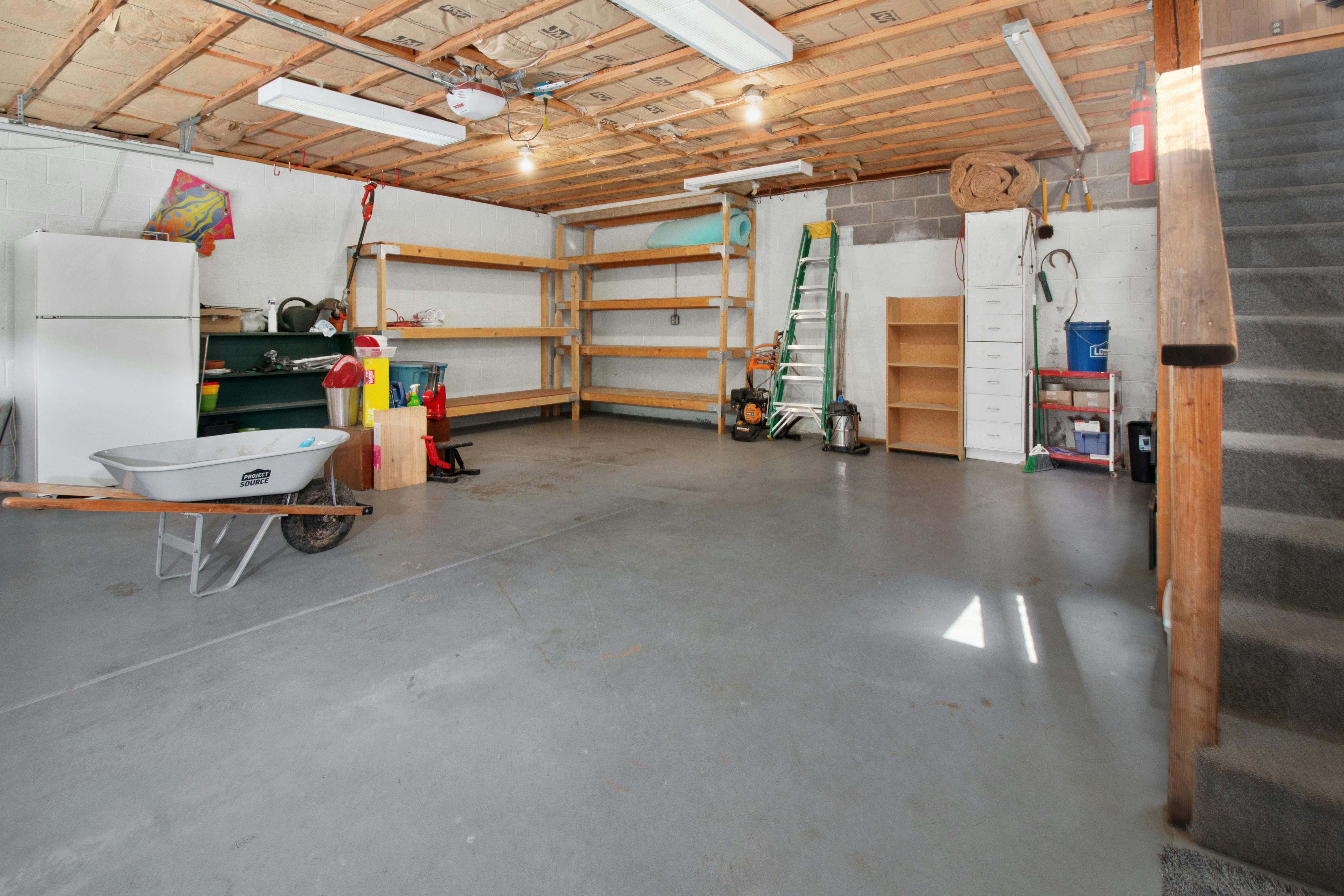
How to Clean a Garage Floor With a Leaf Blower — The Right Technique
A leaf blower clears a two-car garage in under five minutes — faster than any broom. The problem isn't the tool, it's technique: wrong speed and no exit path for displaced air creates a dust cloud that coats everything. We cover the back-to-front sweep pattern, speed settings by debris type, floor type guide, gas vs. battery safety rules, and a full 7-step walkthrough.
How to Clean Gutters With Gutter Guards Installed — By Guard Type
Gutter guards reduce cleaning frequency — they don't eliminate it. The right method depends entirely on which guard you have: a blower works on mesh, screen, and reverse-curve; micromesh needs a soft brush plus hose rinse; foam and brush guards must come out first. We cover the correct technique for all six guard types, plus why pine needles defeat every guard on the market.
Leaf Blower vs. Pressure Washer for Gutters — Which Should You Use?
Two tools, one job — but they're not interchangeable. A blower clears dry debris faster with no water and no ladder required. A pressure washer removes compacted sludge, moss, and multi-season buildup that airflow can't touch. We map 8 real-world scenarios to the right tool, cover PSI thresholds, gutter material damage risks, and the optimal two-tool workflow.
How to Clean Gutters With a Leaf Blower — The Complete Guide
A leaf blower clears gutters faster than any hand method — but only under the right conditions. We cover the minimum CFM and MPH specs for single and two-story homes, the ground-level attachment method vs. the roof method, a debris type guide covering what a blower handles and what it won't, and a full seven-step technique walkthrough from setup to final flush.
Snow Blower Leaving a Strip of Snow — Why It Happens and How to Fix It
Your snow blower clears most of the driveway, then leaves a stubborn ridge or strip. Five causes account for nearly every case — worn scraper bar, misadjusted skid shoes, slipping auger belt, broken shear pin, or operator technique. We include a quick-diagnosis guide based on where the strip appears, step-by-step fixes for each cause, and a surface-type guide for paved, gravel, and paver driveways.

Best Leaf Blower for Pine Needles — What Actually Moves Them
Pine needles behave nothing like leaves — they're cylindrical, dense, and they wedge into grass blades. A 140 MPH handheld that breezes through dry leaves will barely touch embedded needles. We cover the MPH and CFM thresholds that actually move them, surface-by-surface technique, and the four blowers that handle them best.
Snow Blower Chute Keeps Clogging — Every Cause and Fix
Wet snow gets the blame — but slow ground speed, an unprepped chute, and a worn impeller cause just as many clogs. We cover five causes with a snow-type guide and quick-diagnosis table, walk through every fix in order, and include a non-stick spray comparison so you know what actually works.
Snow Blower Auger Not Turning — Diagnose It by What Still Moves
Parts sites give you a list of five causes and a link for each. One observation narrows it first: does the impeller still turn? We map the full decision tree from shear pins to gearbox, cover what each repair actually involves, explain why battery machines need a completely different diagnosis, and why a hardware store bolt in place of a shear pin costs you a gearbox.
Snow Blower Won't Start After Sitting — Every Cause and Fix
Stale fuel and a gummed carburetor cause 80% of post-storage no-starts. We map six causes to their symptoms with a quick-diagnosis table, walk through every fix in priority order, and cover when to stop DIY and call a dealer. Includes a prevention checklist so it doesn't happen again next season.

How to Blow Leaves Off a Gravel Driveway Without Moving the Stones
Most people crank the power up and wonder why gravel is now on the lawn. The fix is almost entirely about technique — not buying a different blower. We cover the three variables that matter (speed, height, angle), a five-step walkthrough, and a gravel type guide showing what's easy, medium, and hard to work with.

Snow Blower vs Leaf Blower for Light Snow — Which Should You Use?
For a dusting of dry powder, your leaf blower is faster than your snow blower — and leaves cleaner pavement. We map nine real-world scenarios to the right tool, explain the CFM and MPH thresholds that determine whether your blower can handle snow, and lay out the practical workflow for using both tools together all winter.
Snow Blower Not Throwing Snow Far? Every Cause and Fix
Short throw distance is almost always one of six fixable problems — wet snow technique, worn impeller belt, chute friction, low engine RPM, worn impeller paddles, or passes that are too wide. We include a quick-diagnosis table to identify your specific issue, expected throw distances by machine type, and a prioritized fix order to work through before calling a dealer.

Best Leaf Blower for Acorns — What Actually Moves Them
Acorns are heavy, round, and grip grass like anchors — a 140 MPH handheld won't touch them. We cover the Newton force threshold you actually need, why the surface (pavement vs. grass) changes the minimum spec entirely, and why routing acorns through your blower/vac's vacuum mode will destroy the impeller.

Best Leaf Blower for Mulch Beds — Without Blowing the Mulch
The problem isn't finding a powerful enough blower — it's having one controllable enough. We cover the 40–60% throttle range, the 25-degree nozzle angle, and the criss-cross technique that separates leaves from bark chips. Plus a mulch type guide: what's easy, what's tricky, and one type where you should skip the blower entirely.

Leaf Blower Gutter Attachments — The Complete Guide
Tube-and-nozzle kits make gutter cleaning ladder-free — but only for dry debris, and only with the right CFM. We break down how attachments actually work, what power threshold you need, which kits seal well enough to perform under load, and the one condition no attachment can handle regardless of blower power.

How to Store a Leaf Blower for Winter — Gas, Battery & Corded
Gas, cordless, and corded blowers have completely different winterization checklists. We cover the carburetor varnish failure that causes most spring no-starts, the charge level and temperature rules for lithium-ion battery storage, and a manufacturer comparison table for EGO, STIHL, Milwaukee, Greenworks, and DeWalt.
Best Snow Blower for a Gravel Driveway — Don't Throw Rocks
Gravel driveways punish the wrong machine. Single-stage augers grab and launch stones; wheel drive digs in and shifts your surface. We cover skid shoe adjustment, why two-stage is the right starting point, and the three machines that handle loose stone safely without destroying your driveway each winter.
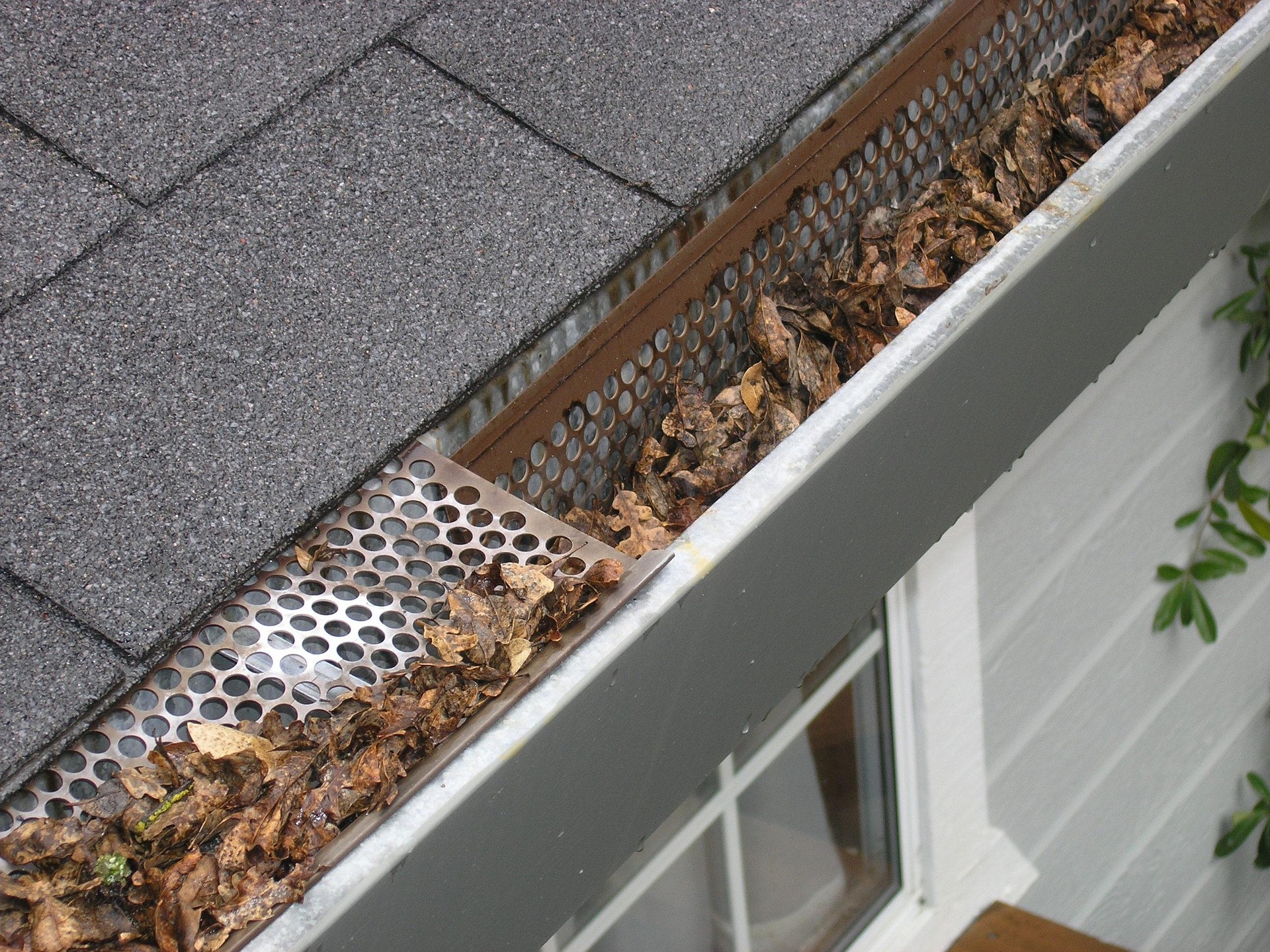
Gutter Cleaning with a Blower: Metal Gutters vs Vinyl Gutters
Metal and vinyl gutters respond differently to leaf blower cleaning. Vinyl becomes brittle below 40°F, snap joints can pop loose, and UV degradation changes what's safe. Metal is more forgiving but joint seals are the vulnerability. We cover the pressure limits, temperatures, and techniques for each material.

Best Gutter Blower for Wet Leaves — High-MPH Kits That Actually Clear
Dry leaves blow out easily. Wet leaves are a different problem — heavier, matted, stuck to the gutter floor. We break down why MPH leads over CFM for soaked debris, rank the four kits that handle it best, and cover the technique adjustments that make the difference.

Best Gutter Blower for a Two-Story House — Reach, Power & Safety
Standard gutter kits stop at 10–12 feet. Second-story gutters sit at 16–22 feet. We cover the three kits that actually bridge that gap, explain how much CFM you need at full extension, and walk through the technique that makes two-story ground-level cleaning work safely.

Clean Gutters with a Leaf Blower — No Ladder Required
Climbing a ladder with a running blower is unnecessary and risky. The right gutter attachment lets you clean from the ground. We compare the top kits, explain what CFM you actually need, and show which tools reach single-story and two-story gutters safely.

Snow Blowers for Steep Driveways — Top Picks for Traction & Control
Standard snow blowers slide, spin, and stall on inclines. We researched the machines actually engineered for slopes — track drive systems, serious torque, and the weight distribution needed to grip a hill and keep moving. Here are the top three, ranked by real slope performance.
No guides in this category yet — more coming soon.